hpo Spotlight service strategy
Optimisation of the service strategy
In the context of rising customer expectations, high competitive pressure and increasing digitalisation, service quality is becoming a decisive differentiating factor. In this dynamic environment, long-term customer loyalty requires not only customer-centred offerings, but also agility and efficient processes. Thanks to a holistic service strategy in which strategy, processes and organisation are optimally aligned with customer needs, customer satisfaction can be sustainably increased and decisive competitive advantages created.
Share article

Ever-increasing customer expectations require action from insurance companies
Depending on their service needs, customers have different requirements when interacting with their insurance company. While simple and accessible solutions are required when searching for information, quick accessibility and efficient processing are paramount when it comes to handling claims. However, independent from the client’s need, the desired service quality must be maintained across all channels.
In reality, a lack of integration of the various communication channels as well as isolated departments lead to a fragmented customer experience and a service quality that is often inconsistent and perceived as poor by policyholders.
As insurance products differ only marginally from one another, customers are generally willing to switch insurers, and service quality becomes a decisive unique selling point. Therefore, in order to be successful in a highly competitive market, insurance companies must leverage their service quality and ensure that every customer contact – whether online, by telephone or on site – is perceived as positive.
Creating a differentiating customer experience with a holistic service strategy
Service quality is shaped by the few interactions along the customer journey. The key to increasing service quality and thus customer loyalty is to define the desired service level as part of a service strategy both in general and for the individual customer interactions and then to anchor it technically, processually and organisationally.
The following steps are pivotal to developing a holistic service strategy (see fig. 1):
- Defining the desired service level
As part of the strategic focus, both industry trends and competitively differentiating core competences should be taken into account to define the desired ambition. - Analysing the current customer experience
An analysis of customer’s interactions and needs helps to identify moments of truth or pain points in customer care. - Definition of the target customer journey
The individual customer interactions should bedesigned efficiently and seamlessly in line with the desired service level. - Deriving the need for action in the processes and in the organisation
Finally, a seamless transition between different channels for the insured and a consistent service quality must be ensured by aligning the internal processes and the organisational structure with the customer needs and customer journey.
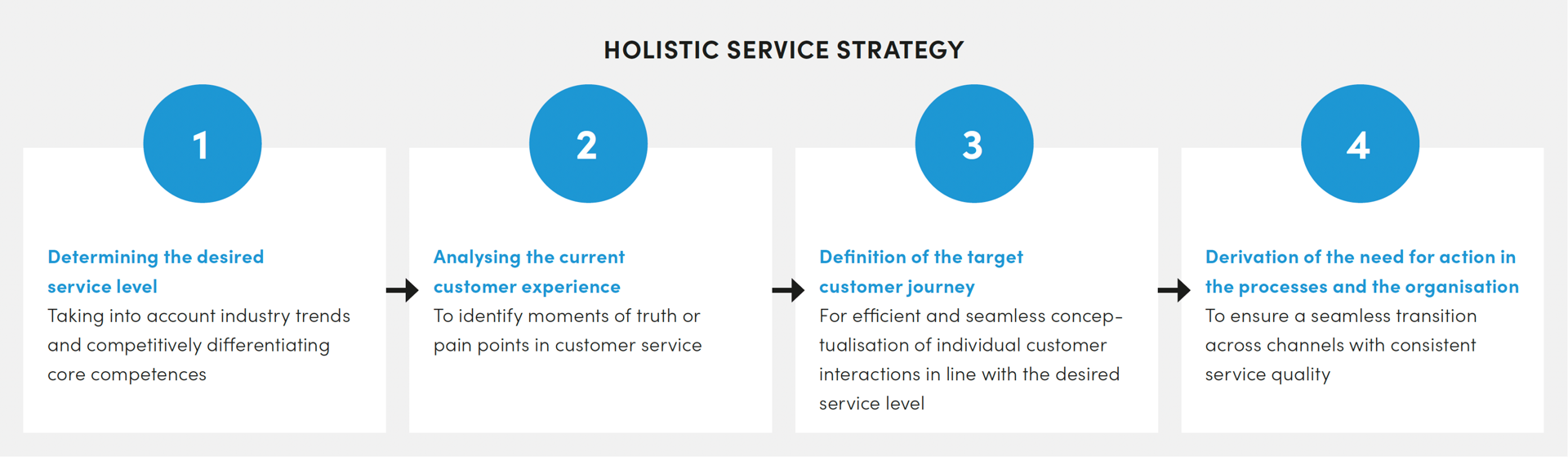
Fig. 1: Steps for developing a holistic service strategy
Customer journey mapping allows the entire customer life cycle to be mapped from the customer’s perspective. The systematic elaboration of the phases, channels and perception of customer interactions enables end-to-end optimisation of the customer journey.
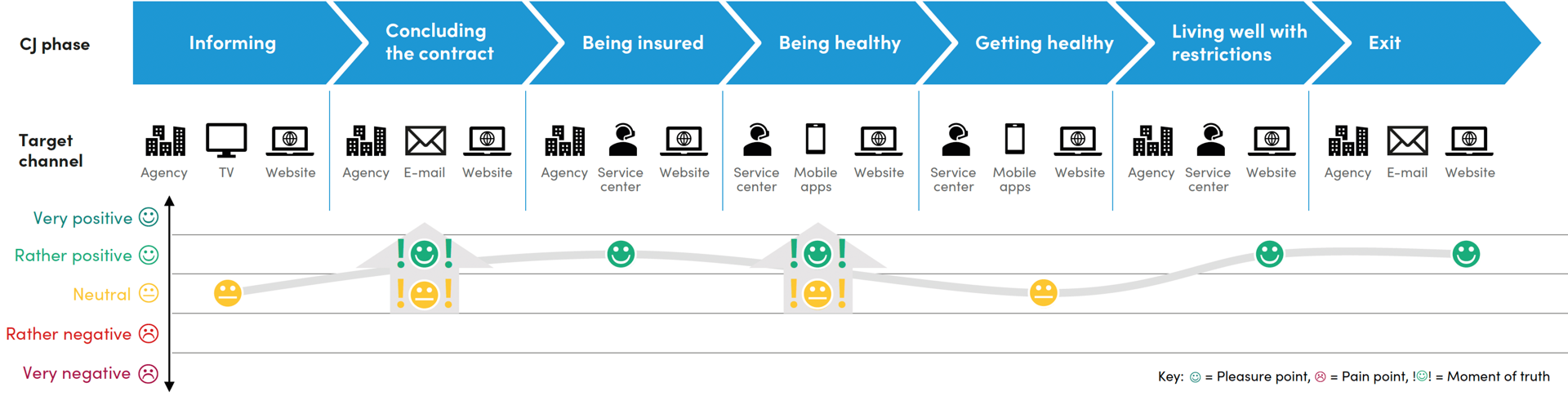
Fig. 2: Customer Journey Mapping
The subsequent technical, procedural and organisational anchoring of the defined target customer journey ensures that the concepts are put into practice.
An optimised service strategy increases customer satisfaction and binds policyholders to the company in the long term
With a clear service strategy and knowledge of the most important contact points, it is possible to respond proactively to customer concerns and thus increase customer satisfaction. Inefficient processes and unnecessary contact points can be identified, and consequently optimised or eliminated, which leads to cost savings for the company.
Ultimately, an optimised service strategy leads to increased customer loyalty and increases competitiveness in the long term.

Your strategy and organisation consultancy
Who is hpo management consulting?
hpo stands for High Performance Organisations. As experts for strategy, business processes, organisation and transformation, we have been supporting nationally and globally active clients since 1995 in releasing performance potential and transforming strategies into measurable results. With our holistic and partnership-based enterprise desing approach, we reliably lead them to their goal: a consistently designed and sustainably effective High Performance Organisation - fit for the future and with a clear competitive advantage.
hpo - unlocking performance