hpo Practical Case introduce a new ERP system
From the ERP crisis to a high-performance organisation
How an electrical system installer achieved the digital turnaround with hpo.
Share article

The key to the success of IT projects lies in a deep understanding of the business processes
A leading provider in the field of electrical system construction and installation failed to introduce a new ERP system due to a lack of clarity about processes, requirements and objectives. Together with hpo , the company set a new course: strategically well thought-out and process-orientated. The result: A solid foundation for the digital transformation.
The challenge: Failed ERP implementation and lack of process clarity jeopardise competitiveness
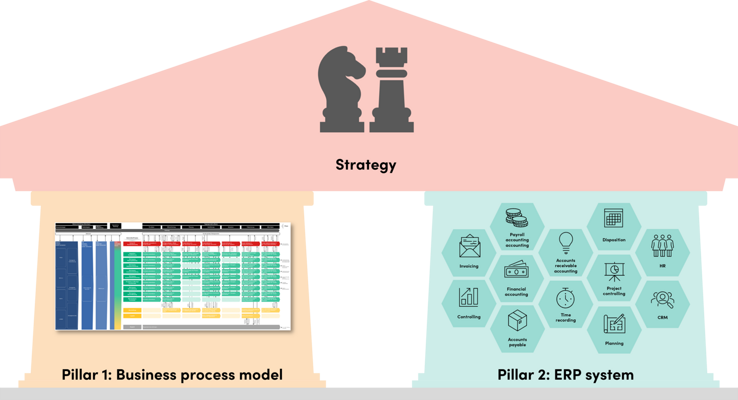
The company was forced to rethink its digitalisation strategy after a failed ERP implementation. The reasons for this were a lack of transparency regarding business processes, unclear system requirements and a historically grown IT landscape with media disruptions and difficult data access. The existing lack of process transparency prevented an effective system implementation - a critical weakness in view of the high competitive pressure and increasing complexity in the industry.
The objective: Clear processes and strategic alignment as the foundation for a successful ERP transformation
The project objective was to create company-wide transparency regarding processes, precisely define system requirements and align the organisation in such a way that the ERP system not only fulfils technical requirements, but also digitally supports the central value proposition - excellent service quality. This should make the ERP system an enabler for future growth.
The approach: Integrated strategy, process and system work with a clear focus on the customer promise
hpo pursued a methodically sound approach:
- Strategic orientation: Development of a clear value proposition and strategic thrusts as a guideline for all further steps
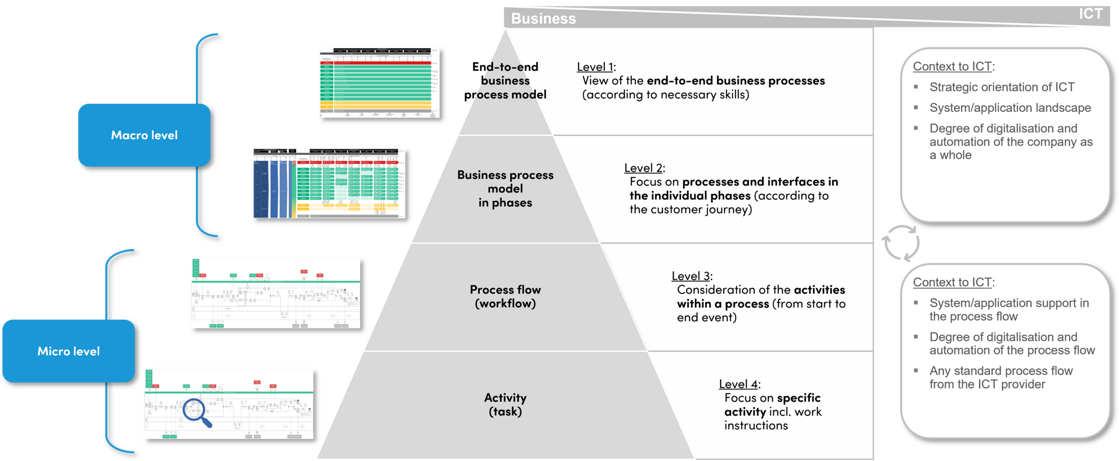
- Process modelling: Complete survey and modelling of the target processes incl. of the relevant data objects and tools such as IT systems used
- Harmonisation: Standardisation of processes across company boundaries
- Requirements definition: Derivation of clear system requirements aligned with the target processes developed
- Implementation support: Collaboration with the ERP partner to ensure full implementation of the requirements
- Change management: Accompanying communication and other measures to ensure acceptance among employees
The added value: increased efficiency and digital sustainability
The structured approach led to measurable successes:
- Processes as a differentiating feature: The modelled processes are aligned with the value proposition.
- Process-driven systems: The new ERP system optimally supports the target processes
- High acceptance: Involving employees in the development of processes and requirements as well as targeted change management increases user acceptance.
- Scalability: Harmonisation of processes enables uniform work and the use of synergies across the companies.
- Future viability: The company is now in a position to react flexibly to changes in the market and to play out its service quality with digital support - a clear step towards a high-performance organisation.
Are you facing a similar challenge?
Talk to us. Together, we lay the foundations for a successful ERP transformation.

Your strategy and organisation consultancy
Who is hpo management consulting?
hpo stands for High Performance Organisations. As experts for strategy, business processes, organisation and transformation, we have been supporting nationally and globally active clients since 1995 in releasing performance potential and transforming strategies into measurable results. With our holistic and partnership-based enterprise desing approach, we reliably lead them to their goal: a consistently designed and sustainably effective High Performance Organisation - fit for the future and with a clear competitive advantage.
hpo - unlocking performance